"Ask me why I wear this. Or skip the small talk and scan."
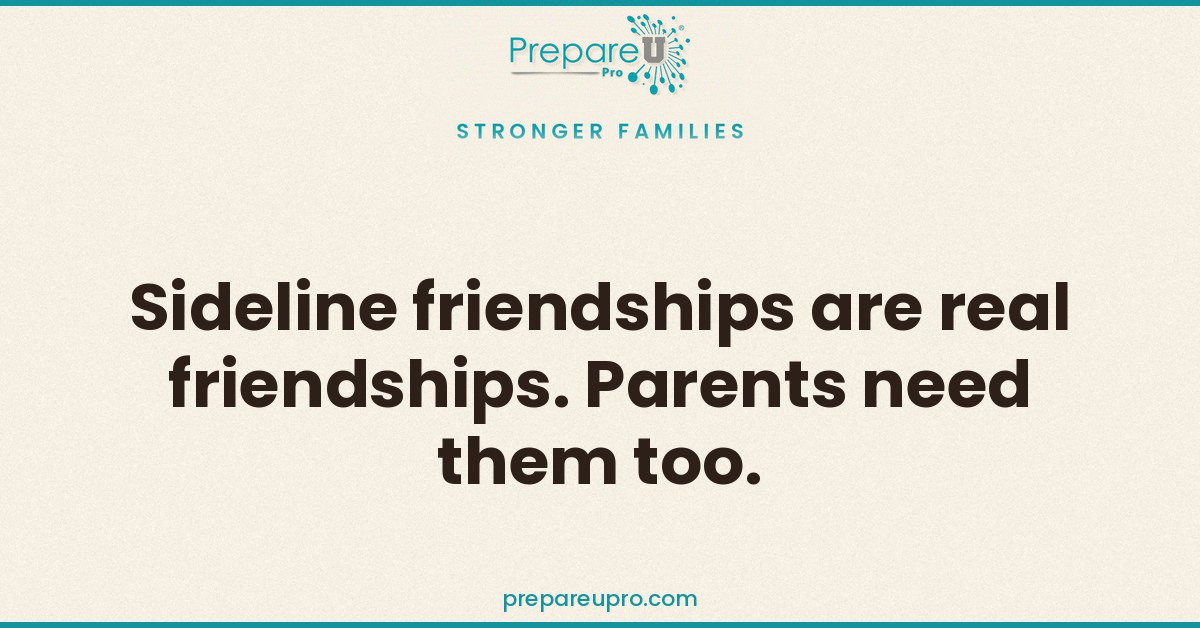
You've spent roughly two hundred hours within six feet of the same parents this year. You know their kid's shooting percentage, their umbrella situation, and their opinion of the league schedule. You do not know their last name, what they're carrying at home, or whether they'd be a great friend - statistically, someone in those chairs would be.
Adult friendship is famously hard. The sideline is famously full. Somehow we've kept these two facts apart.
Why it lands
Sociologists identified the recipe for friendship decades ago: proximity, repetition, and unplanned interaction - exactly the conditions of school and college, which is why friendship felt effortless then and evaporates after. Adult life removes all three. Except - look around the bleachers - the sideline accidentally rebuilds every one: same people, same place, weekly reps, built-in dead time. Researchers studying friendship formation estimate real hours are what convert acquaintances into friends; sports parents log those hours automatically and mostly spend them in parallel silence, performing "fine" at each other.
Add the loneliness data - large shares of adults, parents especially, reporting too few close friends - and the sideline stops being a waiting area. It's the richest unworked friendship vein most adults have.
Working the vein
1. Cross the parallel-to-personal line once. One question that isn't about the game: "What do you do when you're not at a field?" Research on conversation shows people wildly underestimate how much others enjoy being asked real questions. The awkwardness you fear lasts nine seconds.
2. Extend one micro-invitation. Friendship needs a rep outside the default venue: "We're grabbing food after - join?" Low stakes, easy decline, and it's the exact mechanism (repeated informal contact) the research says builds bonds. Most people are waiting to be asked. Be the asker.
3. Skip small talk with one honest sentence. "This season is running our whole household - how are you actually holding up?" On a sideline full of parents performing fine, one true sentence is a friendship application with a near-perfect acceptance rate.
Send this to someone
Send this to your folding-chair neighbor. It's been three seasons. Learn their last name.
Where this leads (3 minutes, free)
Learn their names - and learn your own family's numbers. The free GrowEQ check takes about three minutes and shows where you and your family stand across four areas that shape everyday life - meaning, purpose, relationships, and anxiety - so you can see exactly where the fastest gains are. No credit card, and the results are yours alone.
Prepare U Pro grew out of more than 10 years of the Prepare U curriculum in real classrooms - the research is public at prepareu.live.
Prepare U Pro is education and skill-building. It is not therapy, and it isn't a substitute for professional care. If your family is in crisis, please reach out to a licensed professional - in the US you can call or text 988 anytime. Find a crisis center near you.