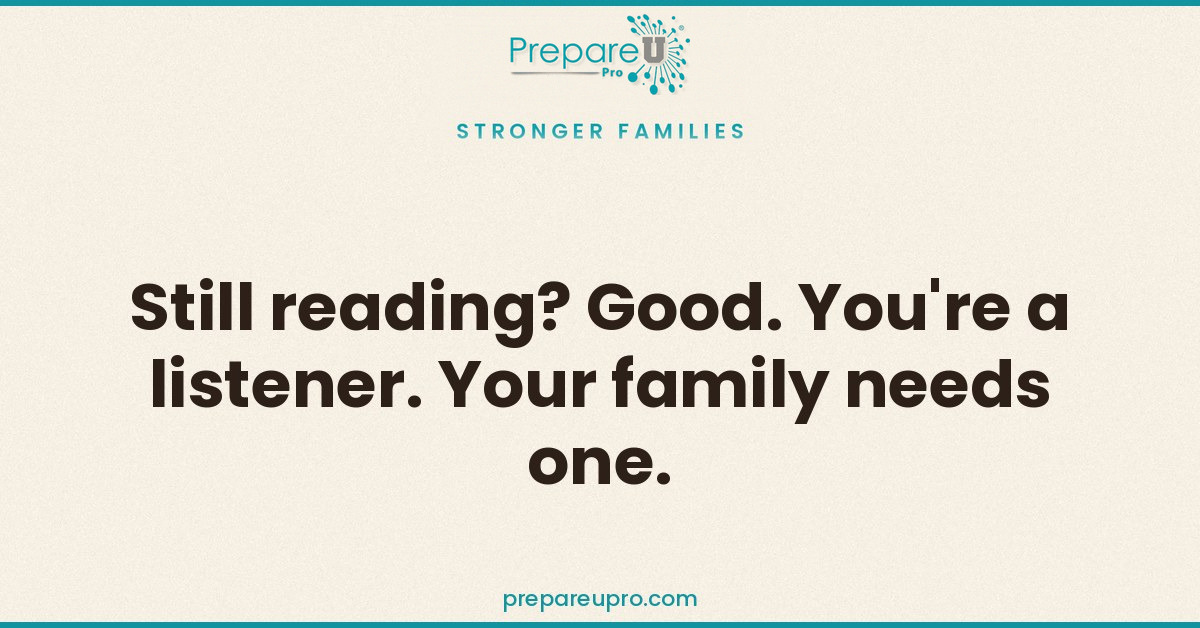
"Still reading? Good. You're a listener. Your family needs one."
Every family has an official spokesperson, a designated worrier, a person in charge of remembering birthdays, and at least two people locked in a decades-long debate. What most families are missing is stranger and simpler: one person who actually listens. Not waits-to-talk. Not listens-to-fix. Listens.
If people already tend to tell you things - congratulations, you've been drafted. Here's how to be great at the position.
Why it lands
Research on what psychologists call perceived partner responsiveness - the sense that someone truly gets you, accepts you, and cares - keeps showing up as one of the strongest single ingredients in close relationships. And studies on high-quality listening find it changes the speaker: people talking to a genuinely attentive listener become less defensive, think more clearly, and reach more balanced views of their own problems. A good listener doesn't just receive the story. They upgrade the teller.
Families are usually terrible at this precisely because everyone knows everything already - so we listen to each other on a decade-old cache, hearing who someone was at fourteen.
The three skills of the position
1. Kill the fix reflex. The listener's hardest discipline: most people, most of the time, are not requesting solutions. When in doubt, ask the sorting question - "do you want ideas, or do you want to vent?" - and then honor the answer. Unrequested advice reads as "stop talking" wearing a helpful costume.
2. Reflect before you respond. One sentence of playback - "so the part that really got you was that he didn't even call" - does two jobs: proves you heard, and lets them correct your version. Reflection is the receipt. People keep talking to whoever issues receipts.
3. Ask the question under the story. Great listeners follow the feeling, not the plot: "What was that like for you?" beats "then what happened?" The plot they'd tell anyone. The feeling they'll only tell the listener - which is the whole reason the family needs one.
Send this to someone
Send this to the family member everyone already calls first. Confirmation of appointment.
Where this leads (3 minutes, free)
Listeners are made, not born. Find out where your family's listening actually stands. The free GrowEQ check takes about three minutes and shows where you and your family stand across four areas that shape everyday life - meaning, purpose, relationships, and anxiety - so you can see exactly where the fastest gains are. No credit card, and the results are yours alone.
Prepare U Pro grew out of more than 10 years of the Prepare U curriculum in real classrooms - the research is public at prepareu.live.
Prepare U Pro is education and skill-building. It is not therapy, and it isn't a substitute for professional care. If your family is in crisis, please reach out to a licensed professional - in the US you can call or text 988 anytime. Find a crisis center near you.